Behavioral Data Science lab

The Behavioral Data Science lab is a research group in the UTS Data Science Institute at the University of Technology Sydney, Australia.

Our research aims to make sense of large amounts of behavioral data, to understand online behavior and its offline effects. We develop core methods in machine learning and optimization in order to distill heaps of raw data into meaningful insights in areas including

  • social and information network analysis,
  • information diffusion across social networks,
  • mis- and dis-information spreading,
  • tomorrow’s labour markets and labour transitions,
  • machine learning,
  • computational social science,
  • data mining, and
  • natural language processing

Two 1-Year Postdoc and multiple funded PhD positions available in detecting and modelling mis-/dis-information spread. If you are interested in working with us, please get in touch.

Recent News

see news archive

  • Jan 2026
    📄 The paper DREAMS: A Social Exchange Theory-Informed Modeling of Misinformation Engagement on Social Media by Lin and Andrei was accepted at The Web Conference 2026 (WWW'26) in Dubai! DREAMS introduces a novel cross-platform framework that models misinformation engagement by integrating Social Exchange Theory with neural architectures. Acceptance rate: 20.1% (676/3370 submissions). Great work, Lin!
  • Dec 2025
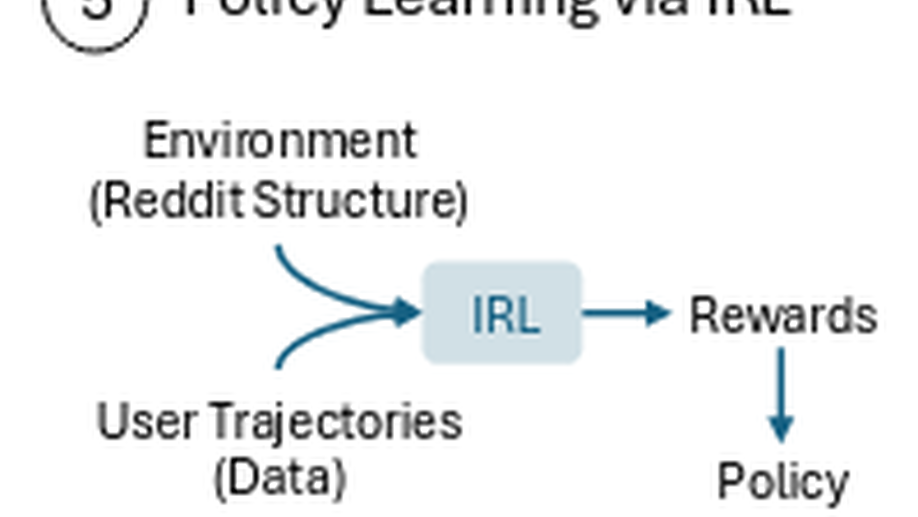
    🎓 Frankie submitted his PhD thesis on identifying problematic content in online social media! His research advances our understanding of hate speech detection through transfer learning and multi-task learning approaches, while introducing novel behaviour-based methods using inverse reinforcement learning to detect malicious actors. This is a big milestone - congrats, Frankie!
  • Dec 2025
    🎓 Congratulations to Rohit who has been conferred his PhD! Huge congrats, Dr Ram! We will be there for the graduation ceremony, we want to come and celebrate this fantastic achievement!
  • Dec 2025
    📰 Lin and Andrei published a new article in The Conversation: What are small language models and how do they differ from large ones? exploring the trade-offs between Large Language Models (LLMs) and Small Language Models (SLMs). While LLMs can write poetry but require cloud computing with privacy concerns, SLMs excel at specialised tasks and can run locally on home PCs or embedded systems like self-driving cars.
  • Nov 2025
    👋 Majid Akhtar joins our group as a Postdoctoral Research Associate focusing on countering disinformation campaigns. Majid completed his PhD at UNSW Sydney in Computer Science and Engineering, where he specialised in cybersecurity with a focus on detecting social media manipulations, fake news detection, and bot detection. Welcome, Majid!

Recent Posts

see post archive

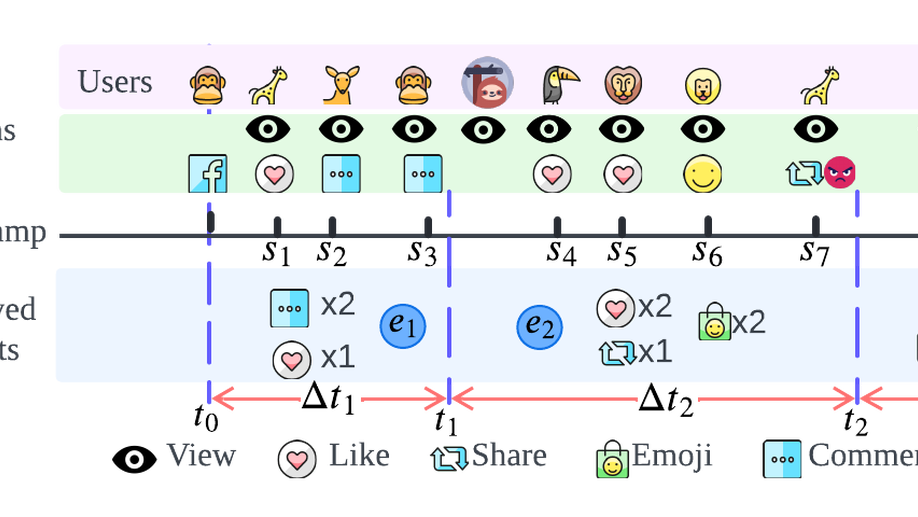
Before It's Too Late: A State Space Model for the Early Prediction of Misinformation and Disinformation Engagement

We present IC-Mamba, a state space model that that forecasts social media engagement by modeling intervalcensored data with integrated temporal embeddings.
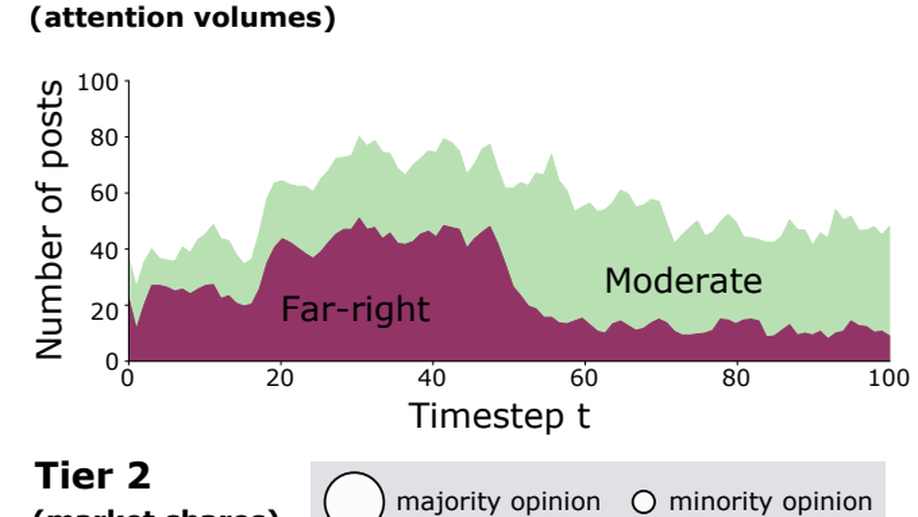
Opinion Market Model: Stemming Far-Right Opinion Spread using Positive Interventions

We introduce the Opinion Market Model (OMM) as a testbed to measure the impact of positive interventions on online opinion dynamics.